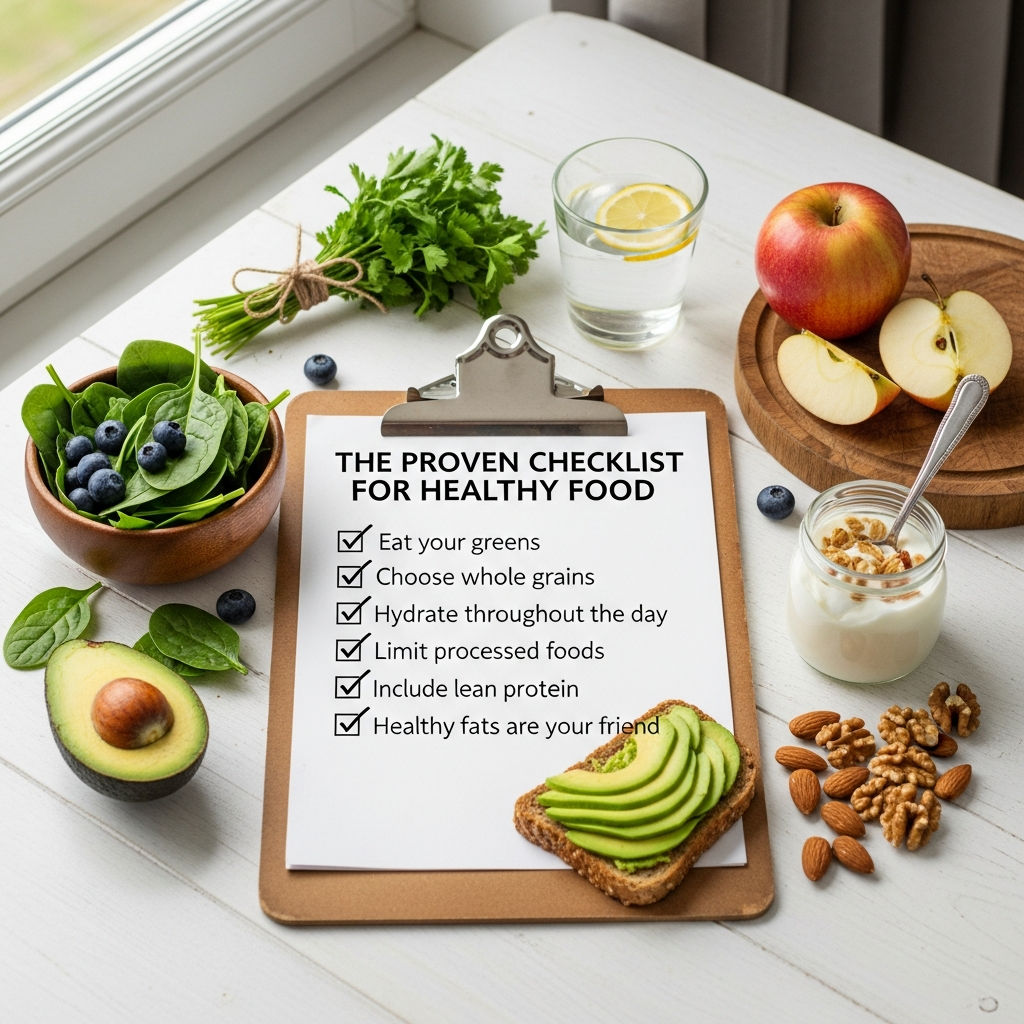
The Proven Checklist for Healthy Food: A Complete Guide to Better Nutrition
In an era of conflicting diet trends, “superfood” marketing, and complex nutritional labels, eating healthy can feel like solving a high-level calculus problem. However, achieving optimal health through nutrition doesn’t require a degree in biochemistry. It requires a systematic approach to what you put in your grocery cart and onto your plate.
This article provides the proven checklist for healthy food, designed to help you filter out the noise and focus on the fundamental principles of nutrition. Whether you are looking to lose weight, boost your energy, or improve your long-term wellness, following these guidelines will ensure your body gets the fuel it deserves.
1. Prioritize Whole, Single-Ingredient Foods
The golden rule of healthy eating is to prioritize whole foods. A whole food is something that remains as close to its natural state as possible. Think of an apple versus an apple fruit leather, or a piece of chicken versus a processed chicken nugget.
The “One Ingredient” Rule
- Check the ingredient list: If the food is the ingredient (e.g., spinach, eggs, oats, almonds), it belongs in your cart.
- Minimize additives: If a product has a long list of chemicals you can’t pronounce, it’s likely highly processed and stripped of its natural nutrients.
- Fiber content: Whole foods are naturally high in fiber, which is essential for digestive health and blood sugar regulation.
2. The Macro-Nutrient Balance Checklist
A healthy meal isn’t just about low calories; it’s about the right balance of macronutrients. Every time you prepare a plate, check off these three categories:
High-Quality Lean Proteins
Protein is the building block of muscle and is essential for metabolic health. It also keeps you feeling full longer.
- Plant-based sources: Lentils, chickpeas, quinoa, and organic tempeh.
- Animal-based sources: Wild-caught fish, grass-fed beef, pasture-raised eggs, and poultry.
Healthy Fats for Brain and Heart Health
The “low-fat” craze of the 90s has been debunked. Your body needs healthy fats for hormone production and nutrient absorption.
- Monounsaturated fats: Extra virgin olive oil and avocados.
- Omega-3 fatty acids: Walnuts, chia seeds, flaxseeds, and fatty fish like salmon.
- Avoid: Trans fats and highly refined vegetable oils (canola, soybean, corn oil).
Complex Carbohydrates
Carbohydrates are your body’s primary energy source, but not all carbs are created equal. Focus on “slow” carbs that digest gradually.
- Root vegetables: Sweet potatoes, carrots, and beets.
- Whole grains: Brown rice, buckwheat, and steel-cut oats.
- Legumes: Beans and peas.
3. The “Eat the Rainbow” Micronutrient Test
Vitamins and minerals (micronutrients) are what allow your body to perform daily functions. The easiest way to ensure you’re getting a full spectrum of micronutrients is to look at the color of your food. Different colors represent different phytonutrients and antioxidants.
- Red: Rich in lycopene and anthocyanins (Tomatoes, strawberries, red peppers).
- Green: High in Vitamin K, magnesium, and folates (Kale, spinach, broccoli).
- Blue/Purple: Packed with powerful antioxidants (Blueberries, blackberries, eggplant).
- Orange/Yellow: High in Beta-carotene and Vitamin C (Carrots, oranges, lemons, squash).
- White: Contains allicin and potassium (Garlic, onions, cauliflower).
4. Decoding Food Labels: What to Avoid
The front of a food package is often designed by marketers to trick you. The back of the package—the nutrition facts and ingredient list—is where the truth lies. When checking for healthy food, keep an eye out for these “red flags”:
Hidden Sugars
Sugar is often disguised under different names. Check the label for high fructose corn syrup, dextrose, maltose, agave nectar, or rice syrup. Aim for foods with zero “Added Sugars.”
Sodium Levels
While the body needs some sodium, processed foods are often overloaded with it to act as a preservative. Look for “low sodium” options or, better yet, season your food at home with herbs and spices.
Chemical Emulsifiers and Preservatives
Ingredients like carrageenan, polysorbates, and nitrates are often used to improve shelf life or texture but can disrupt gut health. If you see these, reconsider the purchase.
5. Hydration: The Foundation of Nutrition
You cannot have a healthy food checklist without mentioning what you drink. Water is essential for every chemical reaction in your body, including fat metabolism and digestion.
- Primary source: Clean, filtered water should be your go-to beverage.
- Herbal teas: Green tea or hibiscus tea provide antioxidants without the sugar.
- What to limit: Liquid calories like soda, “fruit-flavored” juices, and excessive alcohol, which provide empty calories and spike insulin levels.
6. Gut Health and Fermented Foods
Modern science has proven that your “gut microbiome” dictates your immune system, mood, and weight. A healthy food checklist should include items that feed the good bacteria in your stomach.
- Probiotics: Include fermented foods like Greek yogurt (unsweetened), kefir, sauerkraut, kimchi, and kombucha.
- Prebiotics: These are fibers that feed your gut bacteria. Found in garlic, leeks, onions, and under-ripe bananas.
7. Sustainable Shopping and Sourcing
Healthy food isn’t just about what it is, but how it was grown. The environment in which food is produced affects its nutrient density.
- Seasonal Produce: Food grown in season is fresher and contains more nutrients than food shipped across the globe.
- Organic vs. Conventional: Refer to the “Dirty Dozen” list to know which produce has the highest pesticide residue and should be bought organic.
- Ethical Meat: Look for “Pasture-Raised” or “Grass-Fed” labels, which generally indicate higher Omega-3 content and fewer antibiotics.
The Ultimate 10-Point Healthy Food Checklist
If you are in a rush at the grocery store, use this summarized 10-point checklist to make better decisions instantly:
- Is this food in its original, natural form?
- Does it have fewer than five ingredients?
- Is it free from “Added Sugars” or high fructose corn syrup?
- Are there at least two different colors on my plate (vegetables)?
- Did I include a high-quality protein source?
- Does it contain healthy fats rather than processed vegetable oils?
- Is the sodium content reasonable (less than 20% of daily value)?
- Is there a significant source of fiber (at least 3-5 grams per serving)?
- Am I drinking enough water to support the digestion of this meal?
- Is this food nutrient-dense rather than just calorie-dense?
Conclusion
Healthy eating doesn’t have to be a source of stress. By moving away from “dieting” and moving toward a checklist-based approach to nutrition, you create a sustainable lifestyle. The goal isn’t perfection; it’s consistency. By prioritizing whole foods, balancing your macros, and being a savvy reader of food labels, you take control of your health one bite at a time.
Start today by choosing just three items from this checklist to focus on. Once those become habits, incorporate the rest. Your body, mind, and future self will thank you.

